






Genocide Watch has issued a new emergency alert warning that the ongoing campaign against Uyghurs in occupied East Turkistan constitutes genocide and crimes against humanity under international law, calling for stronger and more coordinated international action.
The alert, titled “Genocide Emergency: Xinjiang, China 2025,” examines policies implemented by the Chinese Communist Party in East Turkistan, what Beijing calls “Xinjiang (New Territory),” and concludes that they violate multiple provisions of the United Nations Genocide Convention.
Genocide Stages and State Denial
In its assessment, Genocide Watch situates China’s campaign within its ten-stage model of genocide. The group finds that the systematic repression of religious practice, freedom of movement, and cultural expression—combined with pervasive digital surveillance—corresponds to Stage 3, discrimination.
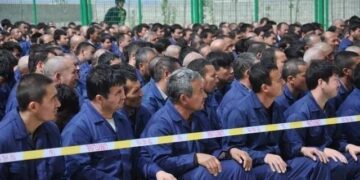
It classifies the mass detention and torture of Uyghurs in so-called “re-education camps” as Stage 8, persecution, and describes mass rape of Uyghur women and the large-scale removal of Uyghur children into state institutions as Stage 9, extermination. Chinese state denial of these acts is identified as Stage 10, denial.
The alert also criticizes what it describes as “genocide scholar” denial, naming William Schabas and Jeffrey Sachs as figures whose public interventions, it argues, have contributed to minimization or denial of the Uyghur genocide.
Camps, Forced Labour, and Birth Prevention
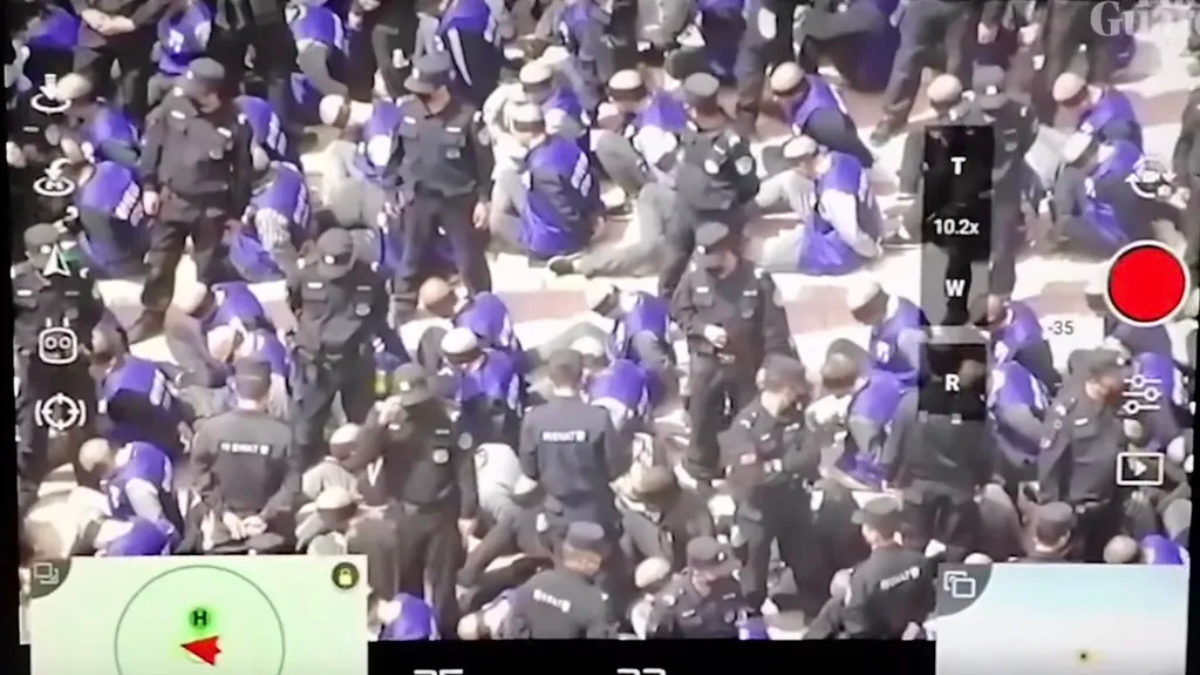
According to Genocide Watch, between 800,000 and 2 million Uyghurs have been detained since 2017 in mass internment facilities for forced political indoctrination. Detainees face physical abuse, sexual violence, bans on Uyghur language, and the criminalization of Islamic practice.
Outside the camps, the alert describes East Turkistan as one of the most heavily surveilled regions in the world, citing biometric data collection, AI-driven monitoring systems, and dense networks of checkpoints and police stations.
Many Uyghurs released from detention are transferred into forced labour in cotton fields and factories, embedding coercion across global supply chains. The report also highlights coercive birth-prevention policies, pointing to sharp declines in Uyghur population growth.
Genocide Watch states that forced sterilization, forced abortions, and restrictive birth-control measures violate Article 2(d) of the Genocide Convention, while the large-scale removal of Uyghur children violates Article 2(e).
Exile Leader Welcomes Alert, Faults Terminology
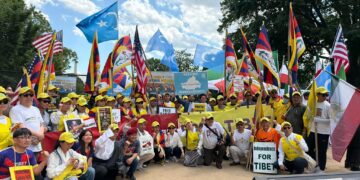
The renewed genocide warning was welcomed by Salih Hudayar, Minister of Foreign Affairs and Security of the East Turkistan Government in Exile, who praised the alert while criticizing aspects of its terminology and framing.
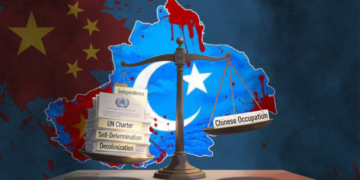
“The root cause of the ongoing genocide is China’s military occupation and settler colonization of East Turkistan,” Hudayar said in a post on X, arguing that mass detention, forced labour, and coercive birth-prevention policies are tools to secure permanent Chinese control over the country.
Hudayar rejected the use of the term “Xinjiang,” noting that it is a colonial label meaning “New Territory” that erases East Turkistan’s history as an independent country.
“Lasting solutions require external self-determination, decolonization, and the restoration of East Turkistan’s independence—not reforms under continued Chinese occupation.” — Salih Hudayar, Minister of foreign Affairs and Security of the ETGE
Calls for Sanctions, Trade and Policy Changes
Genocide Watch urged the United States and other UN member states to ban imports made with Uyghur forced labour, tighten supply-chain monitoring, restrict exports of surveillance and AI technologies used in repression, and bar investment in companies benefiting from coercive labour systems.
The group also called for expanded protection, legal aid, and resettlement options for Uyghur refugees and asylum seekers.
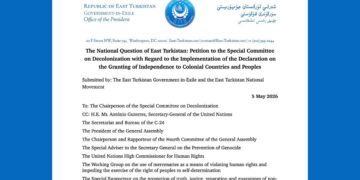
Hudayar and other East Turkistani exile figures said such measures must be paired with a shift in official language and policy, urging governments and institutions to recognize East Turkistan as an occupied country rather than part of China.
For activists and exile leaders, recognition of occupation and support for decolonization are framed as essential steps toward ending the ongoing genocide.

