





The East Turkistan Government-in-Exile (ETGE) marked the 76th anniversary of China’s occupation of East Turkistan on Monday with commemorations in Washington, DC, framing the 1949 takeover as the beginning of an occupation that continues today through what exile leaders describe as genocide and systematic colonization.
ETGE officials said the anniversary is both a national day of mourning and a moment to intensify international pressure for recognition of East Turkistan as an occupied country and for “the full restoration of East Turkistan’s independence.”
From Invasion to Occupation
Chinese Communist forces entered East Turkistan on October 12, 1949, weeks after the founding of the People’s Republic of China. On December 22, 1949, those forces dismantled the independent East Turkistan Republic. Exile leaders identify that date as the start of formal occupation and the erosion of East Turkistan’s sovereignty, political institutions, and national rights.
December 22 has since been designated by the ETGE as a national day of mourning and resistance.
“Since 1949, the people of East Turkistan have endured unimaginable atrocities under Chinese colonial rule.”
— Salih Hudayar, Minister of Foreign Affairs and Security of the ETGE
Demonstration in Washington
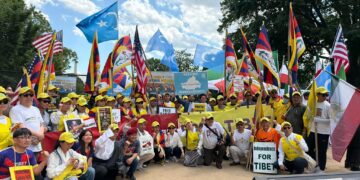
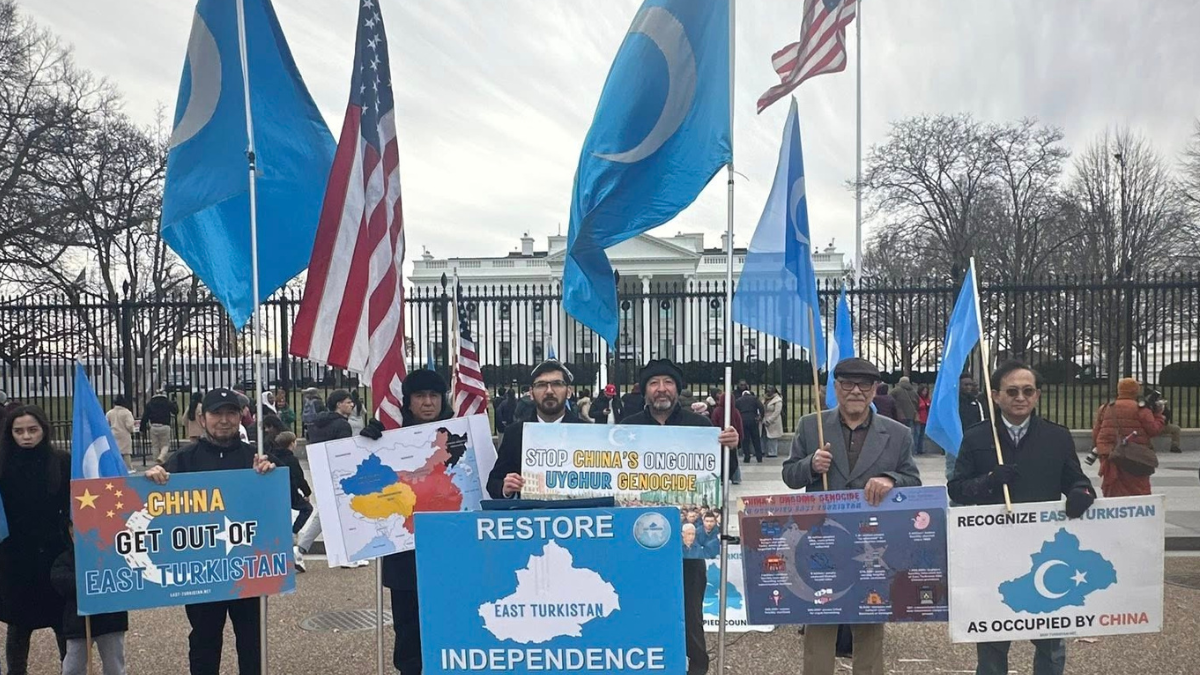
On December 21, the ETGE and the East Turkistan National Movement organized a demonstration outside the White House to honor victims of 76 years of Chinese rule and to press for concrete policy changes. Protesters carried East Turkistan flags and signs reading “Restore East Turkistan Independence,” “China Get Out of East Turkistan,” and “Recognize East Turkistan as Occupied by China.”
ETGE leaders urged the United States and other governments to recognize East Turkistan’s occupied status in law and policy, arguing that current approaches obscure the political nature of China’s rule.
Genocide and Accountability
Addressing the gathering, Salih Hudayar, minister of foreign affairs and security of the ETGE and leader of the East Turkistan National Movement, said China’s actions against Uyghurs, Kazakhs, Kyrgyz, and other Turkic peoples meet the legal definition of genocide.
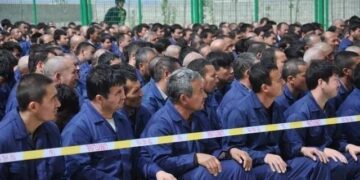
He cited mass detention, forced sterilization, state-organized forced labor, and large-scale killings as evidence, stating that “this is state-organized genocide, not isolated repression.”
Hudayar called on governments to move beyond symbolic resolutions by formally recognizing East Turkistan as occupied, imposing targeted sanctions on Chinese officials and corporations implicated in the atrocities, enforcing comprehensive bans on forced-labor-linked imports, and supporting East Turkistan-related cases before international courts.
Occupation as a Global Issue
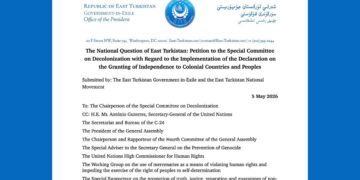
In a statement issued Monday, Mamtimin Ala, president of the ETGE, warned that Beijing’s continued occupation of East Turkistan poses risks beyond the country itself, arguing that inaction could embolden broader expansionist ambitions and undermine the rules-based international order.
He said only a political resolution centered on decolonization can end the crisis.
“Only the full restoration of East Turkistan’s independence can bring a durable end to occupation, genocide, and colonization.”
— Mamtimin Ala, President of the ETGE
Day of Mourning and Resistance
December 22, 2025, marks 76 years since the overthrow of the independent East Turkistan Republic. In its anniversary message, the ETGE reaffirmed its commitment to self-determination and independence, stating that East Turkistanis continue to demand justice and the restoration of their country’s status as a free and independent state.
Hudayar said resistance has persisted for more than seven decades and vowed that the struggle would continue until East Turkistan regains full sovereignty.

