






Chinese state media report that cumulative electricity transmitted out of East Turkistan, what Beijing calls “Xinjiang (New Territory),” has surpassed one trillion kilowatt-hours, marking a milestone in Beijing’s long-running colonial program to export energy from the occupied territory to China’s industrial heartlands.
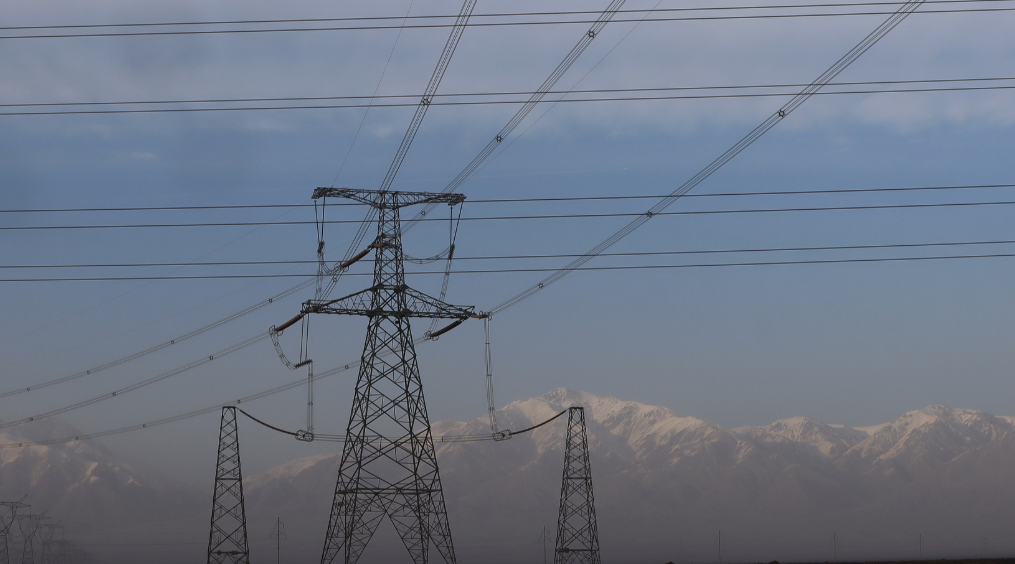
According to figures released by the State Grid Xinjiang Electric Power Company, the threshold was crossed earlier this week. The transmission program began in 2010 and now supplies electricity to 22 provinces across China through a network of ultra-high-voltage lines, including ±800 kV high-voltage direct current (HVDC) corridors linking East Turkistan to eastern and central regions in China.
State broadcaster CGTN described the achievement as a boost to national energy security and a sign of the region’s growing role in China’s power system.
Energy flows under state control
Chinese authorities say East Turkistan’s power exports draw on coal, solar, and wind resources concentrated across the territory. Of the electricity transmitted so far, officials claim about 29.6 percent has come from renewable sources, primarily large-scale solar and wind installations.
“This transmission has supported national energy security,” the State Grid company said in a statement carried by state media.
Officials further assert that exporting electricity from East Turkistan has reduced coal consumption elsewhere in China by nearly 90 million tonnes and cut carbon-dioxide emissions by around 240 million tonnes, figures that could not be independently verified.
Five major transmission channels now connect East Turkistan’s power grid to other parts of China, with a combined transmission capacity of about 33 million kilowatts. Much of this infrastructure is designed to move electricity eastward rather than meet local demand.
Strategic infrastructure and local consequences
The expansion of energy transmission fits into Beijing’s broader strategy of integrating East Turkistan into national supply chains while maintaining tight political and security control over the territory. Large energy projects are planned, financed, and operated by state-owned enterprises, with local communities excluded from decision-making over land use and resource allocation.
To maximize exports, East Turkistan has been folded into China’s unified power market. Officials say a two- to three-hour time difference with eastern China allows flexible trading and load balancing, further optimizing the flow of electricity out of the region.
Rights advocates and researchers note that while Beijing highlights efficiency and environmental gains, the benefits primarily accrue outside East Turkistan. The rapid build-out of power infrastructure has gone hand in hand with land appropriation, environmental pressure, and intensified surveillance, reinforcing a pattern in which the occupied territory functions as an internal energy colony for the Chinese state.
As China continues to expand long-distance power transmission, East Turkistan’s role as a major energy exporter is set to deepen, further entrenching infrastructure that binds the occupied territory’s resources to Beijing’s national priorities rather than local needs.

