



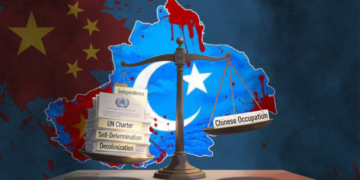



Five years after the United States formally determined that the People’s Republic of China was committing genocide and crimes against humanity, Uyghurs and other Turkic peoples continue to face systematic destruction in East Turkistan, what Beijing calls “Xinjiang (New Territory),” an occupied country under Chinese control since December 22, 1949. The determination, issued on January 19, 2021, elevated international legal language and acknowledgment. It did not halt the genocide it identified.
“I have determined that the People’s Republic of China is committing genocide and crimes against humanity in Xinjiang targeting Uyghur Muslims and members of other ethnic and religious minority groups.”
— U.S. Secretary of State Mike Pompeo, January 19, 2021
A genocide with a clear policy origin
China’s ongoing genocide and crimes against humanity against Uyghurs and other Turkic peoples began on May 23, 2014, when the Chinese government launched what it called the “People’s War Against Terrorism,” also known as the “Strike Hard Campaign Against Violent Terrorism.” This ongoing, state-directed campaign drives and sustains mass detention, forced labor, coercive population-control measures, and the systematic destruction of East Turkistan’s native peoples, culture, and identity.
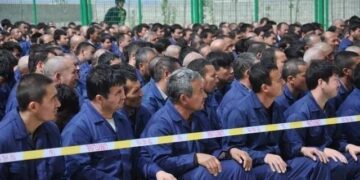
Millions of Uyghurs, Kazakhs, Kyrgyz, and other Turkic peoples were swept into this system. As international scrutiny increased, the Chinese state reduced the visibility of large internment camps while reorganising concentration camps into prisons, “labour-transfer programmes,” and permanent administrative and judicial control.
Mass detention
In May 2019, the United States Department of War (Defense) stated that up to three million Uyghurs, Kazakhs, Kyrgyz, and other Turkic peoples had been sent to concentration camps. In September 2020, China released a white paper claiming that 1.29 million people per year had passed through what it called “vocational training” facilities between 2014 and 2019, a figure that suggests approximately 8 million individuals were subjected to detention or coercive indoctrination over that period.
China’s own judicial data further demonstrates how genocide has been institutionalized through the courts. Official Chinese judicial data show that at least 578,500 Uyghurs and other Turkic peoples have been sentenced to prison terms ranging up to life imprisonment. Although East Turkistan accounts for less than two percent of all areas under PRC control, these sentences represent a disproportionate share of the total prison population across all Chinese-controlled territories, highlighting the systemic criminalization of an entire population.
Forced labour at industrial scale
Forced labour is a central pillar of China’s genocide. Research cited by governments and human rights organizations indicates that at least 3 million Uyghurs and other Turkic peoples have been transferred into forced labour programmes. Detainees and former prisoners are funnelled into factories, farms, and industrial zones inside and outside East Turkistan under coercive conditions.
These labour systems are tied to global supply chains. Investigations have linked them to cotton, tomatoes, electronics, and renewable-energy components, embedding coercion into international markets and complicating accountability.
Population destruction and family separation
China has also targeted the biological and social reproduction of the Uyghur and other Turkic peoples. Women have been subjected to forced sterilisation, forced abortions, and intrusive birth-control enforcement, contributing to sharp declines in birth rates across East Turkistan.
Nearly a million Uyghur and other Turkic children have been forcibly separated from their families and placed into state-run boarding schools and institutions, where the use of the Uyghur language and Islamic practice is restricted or banned. These policies correspond to acts prohibited under Article II(e) of the Genocide Convention, which bars the forcible transfer of children from a protected group.
Cultural and religious erasure
Cultural and religious destruction accompanies physical repression. Satellite imagery and on-the-ground investigations show that at least 16,000 mosques and other religious and cultural sites in East Turkistan have been destroyed, damaged, or altered by Chinese authorities since 2017. Cemeteries, shrines, and historic neighbourhoods have also been erased.
Uyghur writers, scholars, religious leaders, artists, and community figures have been imprisoned or disappeared, severing intergenerational transmission of culture, faith, and collective memory.
Killing for organs and medical expansion
Evidence has also emerged of systematic killing for organ harvesting. In testimony before the United States Congress in 2024, China analyst and organ harvesting researcher, Ethan Gutmann, stated that available evidence indicates between 25,000 and 50,000 Uyghurs and other Turkic people are being killed annually since 2014 for the purpose of organ extraction, describing the practice as industrialised and state-enabled.
In 2025, the Chinese government announced plans to triple the number of organ harvesting centers in East Turkistan, a move that alarmed medical ethicists and human rights groups, given the absence of a voluntary donor system and the occupied territory’s mass detention infrastructure.
Recognition without enforcement
Since 2021, more than a dozen national parliaments have recognised China’s actions as genocide or crimes against humanity, and 51 UN member states have issued a formal condemnation. No binding international enforcement mechanism has followed.
In August 2022, the United Nations Office of the High Commissioner for Human Rights released an assessment concluding that China’s actions in East Turkistan may amount to crimes against humanity. The report found credible evidence of arbitrary detention, torture, sexual violence, forced labour, coercive population-control measures, and the separation of children from their families. No follow-up investigation or accountability mechanism has since been established.
“The extent of arbitrary and discriminatory detention of members of Uyghur and other predominantly Muslim groups… may constitute international crimes, in particular crimes against humanity.”
— United Nations Office of the High Commissioner for Human Rights, Assessment (August 31, 2022)
Reorganised, not ended
Independent assessments confirm that the genocide has not ended. The Congressional-Executive Commission on China concluded in its 2025 annual report that Chinese authorities have reorganised, rather than dismantled, the architecture of genocide, shifting it from camps into prisons, forced labour systems, coercive population controls, and pervasive surveillance.
“The disappearance of camps does not indicate de-escalation; it reflects institutional adaptation.”
— Congressional-Executive Commission on China, 2025 Annual Report
In December 2025, Genocide Watch issued a new emergency alert stating that China continues to carry out genocide and crimes against humanity against Uyghurs and other Turkic peoples in East Turkistan.
“The persistence of mass detention, forced labour, coercive birth-prevention policies, and the large-scale separation of children reflects a failure of international deterrence.”
— Genocide Watch, Emergency Alert (December 2025)
Lack of accountability
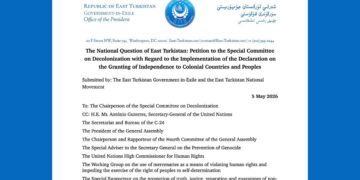
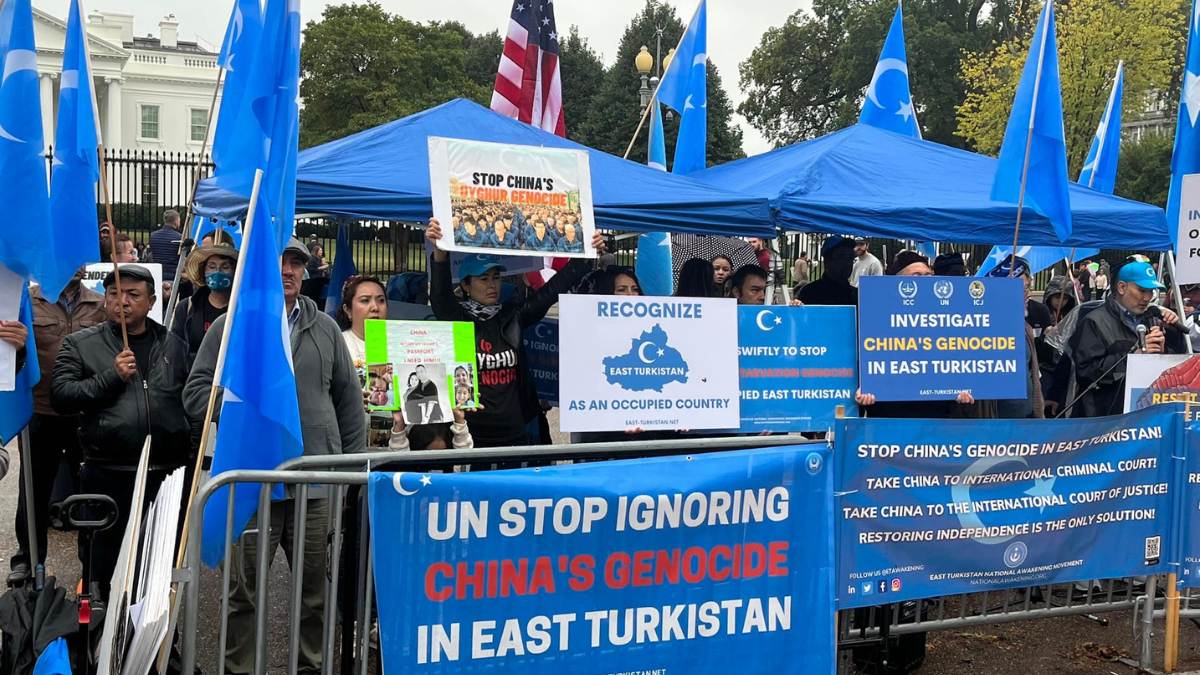
Efforts to pursue international legal accountability have stalled. The East Turkistan Government in Exile and the East Turkistan National Awakening Movement have submitted a formal complaint to the International Criminal Court seeking an investigation into crimes committed against Uyghurs and other Turkic peoples. While the Rohingya precedent demonstrates potential jurisdictional pathways, no governments have formally supported the complaint, and the court has taken no action.
Exile organisations argue that legal mechanisms exist but remain politically obstructed, allowing China and its leadership act with impunity.
Why the genocide continues
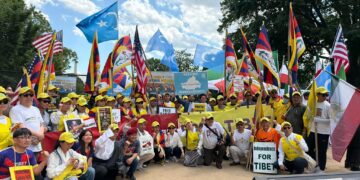
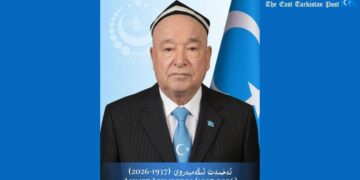
East Turkistan exile leaders argue that the genocide persists because its root cause—Chinese occupation and settler colonization—has not been addressed. In a New Year address on January 1, Abdulahat Nur, prime minister of the East Turkistan Government in Exile, said international institutions have long acknowledged evidence of genocide while avoiding the political question of decolonization.
“There is no sustainable path to protecting the freedoms, human rights, or survival of our people without decolonization and the restoration of East Turkistan’s independence.”
— Abdulahat Nur, Prime Minister, East Turkistan Government in Exile
Five years on
Five years after genocide recognition, the conditions facing Uyghurs and other Turkic peoples remain fundamentally unchanged. Mass detention, forced labour, abortions, sterilizations, cultural erasure, and killing for organs continue, while surveillance is embedded in daily life.
The record shows that naming genocide without enforcement has not stopped it. Until recognition is matched by accountability and the dismantling of colonial control, China’s genocide and crimes against humanity against Uyghurs and other Turkic peoples will continue.

