




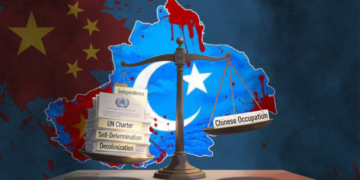



ETGE marks 36th anniversary of Baren uprising with calls for international action
Summary: Exile government commemorates 1990 uprising and links it to current conditions in East Turkistan.
By The East Turkistan Post Staff | April 9, 2026
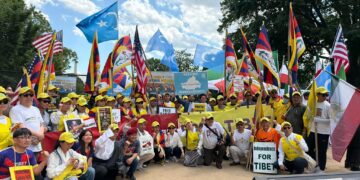
WASHINGTON — East Turkistan, what Beijing calls “Xinjiang (New Territory),” is the subject of renewed political calls from the East Turkistan Government in Exile (ETGE), which marked the 36th anniversary of the 1990 Baren Uprising on Wednesday, describing the event as a continuing symbol of resistance and urging increased international engagement with current conditions in the territory.
In a statement released to commemorate the anniversary, the Washington-based exile government said the uprising remains a significant moment in the modern history of East Turkistan and characterised the events of 1990 as an expression of organised opposition to state policies.
Exile government describes Baren as symbol of political resistance
The ETGE described the Baren Uprising as both a local event and one with broader political significance. According to the statement, the anniversary represents what it called an early manifestation of organised resistance to policies implemented by Chinese authorities in East Turkistan.
“The uprising remains a defining moment representing the people’s demand for freedom and dignity,” the ETGE said in its commemorative statement.
Independent historical analysis of the Baren events remains limited due to restricted archival access and divergent official and non-official accounts. Chinese authorities have historically characterised the incident as a security-related disturbance. Exile groups and rights advocates present it as a politically motivated uprising rooted in opposition to governance policies in East Turkistan.
ETGE links 1990 events to conditions it describes as ongoing
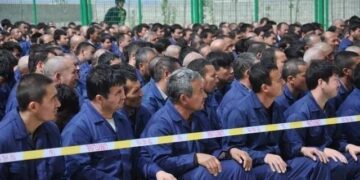
The ETGE stated that conditions it associates with the causes of the 1990 uprising continue to persist. These include, according to the organisation’s statement, restrictions on religious practices, pressures on cultural expression, expanded surveillance systems, and the continued application of security-based governance mechanisms across East Turkistan.
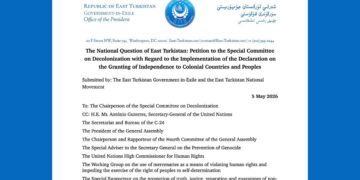
The organisation argued that the anniversary should be understood not only as a historical commemoration but also as a reflection of policy concerns it describes as unresolved. It called on governments, human rights bodies, and international institutions to increase engagement through diplomatic, legal, and economic measures.
Chinese position and verification constraints
Chinese officials have consistently rejected allegations of rights abuses in East Turkistan, stating that policies in the territory are aimed at economic development and social stability. Beijing has not issued a specific public response to the ETGE’s anniversary statement.
The ETGE urged the international community to treat developments in East Turkistan as a matter requiring coordinated multilateral response, emphasising accountability and external scrutiny as necessary components of any engagement framework.
Independent verification of current conditions inside East Turkistan remains constrained. Access for foreign media, independent observers, and researchers has been limited throughout the period covered by the policies cited in the ETGE statement.
The East Turkistan Post is an independent news publication. All claims are attributed to their respective sources. Access restrictions inside East Turkistan limit independent on-the-ground verification.
