





Former U.S. Ambassador-at-Large for International Religious Freedom Sam Brownback has called on the United States government to officially adopt the historical name East Turkistan in place of “Xinjiang,” urging a decisive break from Chinese state terminology that he said legitimizes occupation and conceals genocide.
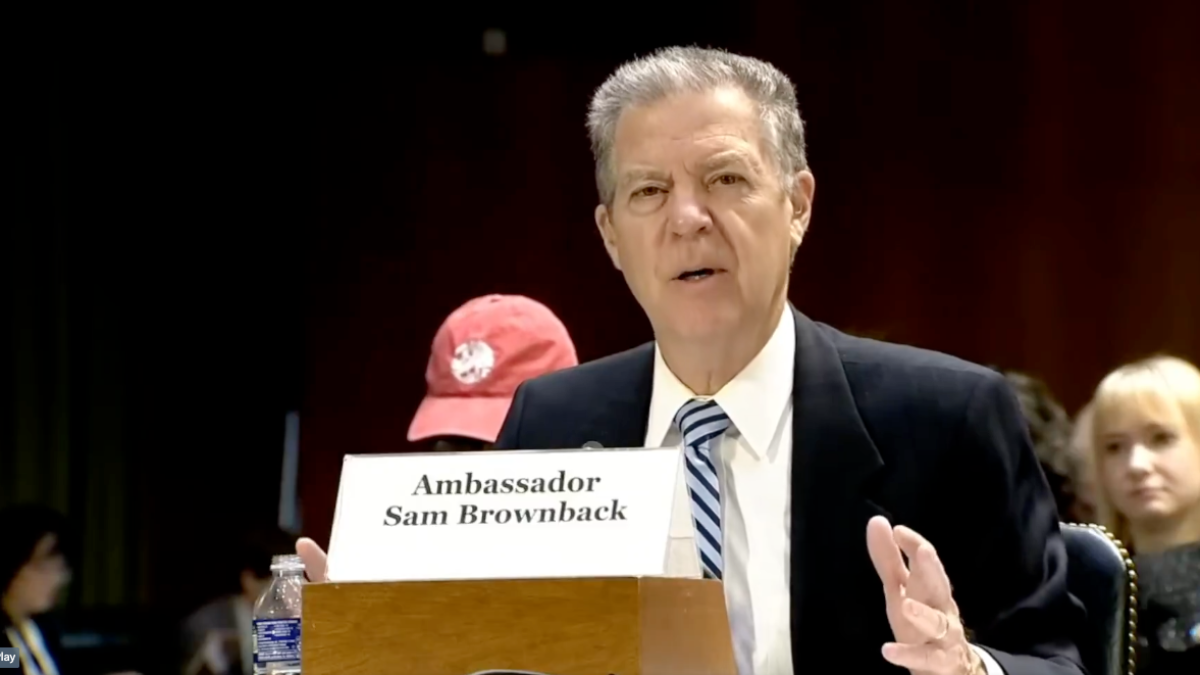
Brownback made the remarks on November 20, 2025, while testifying before the Congressional-Executive Commission on China (CECC) at a hearing titled “China’s War on Religion: The Threat to Religious Freedom and Why it Matters to the United States.” His testimony represents one of the clearest public calls by a former senior U.S. official for a shift in how Washington formally refers to the Uyghur homeland.
Framing Chinese Rule as Occupation
In testimony to lawmakers, Brownback compared Beijing’s control over East Turkistan and Tibet to Soviet domination of Central Asia, rejecting claims that either territory is an inherent part of China.
“Tibet, and for that matter, Xinjiang…East Turkistan, are no more a part of China than Kazakhstan and Uzbekistan were a part of Russia. They are occupied territories and we should see them as such.”
— Sam Brownback, testimony before the CECC
By invoking the collapse of the Soviet Union, Brownback argued that imperial control should not be mistaken for legitimate sovereignty, and that U.S. policy language must reflect historical and political reality rather than colonial narratives.
Calling for Policy Clarity and Accountability
Brownback urged U.S. officials to begin using East Turkistan in government documents and public statements, warning that continued reliance on Chinese-imposed terminology normalizes colonization and obscures crimes recognized by multiple governments and parliaments as genocide.
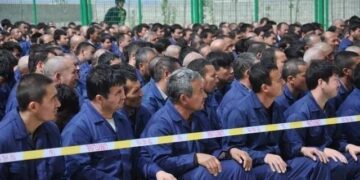
He also highlighted the evolving architecture of repression in the region, noting that mass internment has shifted into forced labor systems embedded in global supply chains.
“Many of the Uyghurs have now been moved from concentration camps to forced labor confinements; same incarceration, different setting.”
— Sam Brownback
Brownback called for high-profile prosecutions of individuals and corporations enabling forced labor and urged rigorous enforcement of U.S. laws barring imports linked to coercion and mass detention.
Religious Freedom as Strategic Policy
The CECC hearing examined the Chinese Communist Party’s systematic persecution of religious communities, including extensive digital surveillance, criminalization of belief, and forced assimilation across occupied territories. Brownback argued that repression in East Turkistan and Tibet is not a peripheral abuse but a core mechanism of Party rule.
He told lawmakers that faith-based communities represent a unique challenge to authoritarian control, stating that “the CCP fears religious people more than our nuclear missiles or aircraft carriers.”
According to Brownback, U.S. engagement with persecuted religious groups—particularly Uyghurs and other Turkic Muslims—is essential not only on moral grounds but also as part of a broader strategic response to authoritarian expansion.
Support from East Turkistan’s Government in Exile
Brownback’s remarks were welcomed by Salih Hudayar, Minister of Foreign Affairs and Security of the East Turkistan Government in Exile and leader of the East Turkistan National Movement.
In a public statement on X, Hudayar praised Brownback for affirming historical and political realities long denied in international forums.
“Tibet and East Turkistan were NEVER part of China. The U.S. must reject Beijing’s colonial label ‘Xinjiang’ and use the correct name East Turkistan.”
— Salih Hudayar
Years of Advocacy Behind the Shift
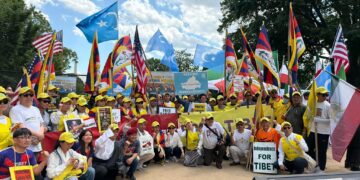
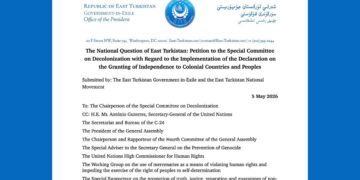
Hudayar’s response reflects years of coordinated advocacy by East Turkistani organizations. Since 2018, these groups have organized regular demonstrations in Washington, D.C., launched petitions calling on the United States to recognize East Turkistan as an occupied country, and coordinated joint letters from more than 60 organizations urging Congress to adopt an East Turkistan–focused policy framework.
These efforts, led by the East Turkistan Government in Exile and allied groups, have pressed U.S. and international institutions to align terminology, legislation, and enforcement with existing genocide determinations and evidence of colonization and occupation.
A Turning Point in U.S. Discourse?
Brownback’s testimony aligns with a broader shift among U.S. lawmakers and human rights advocates who are increasingly rejecting Beijing’s framing of occupied territories. If adopted, a change in official U.S. terminology would bring policy language into closer alignment with documented realities on the ground.
For Uyghur and other East Turkistani exiles, such recognition would mark a significant step toward international acknowledgment of their homeland’s true status and toward accountability for ongoing crimes committed under occupation.

