






China is rapidly transforming occupied East Turkistan, what Beijing calls “Xinjiang (New Territory),” into a showcase tourism market, reporting record visitor numbers and ambitious revenue targets even as repression of Uyghur and other Turkic peoples continues unabated.
According to a recent report by the BBC, Chinese authorities are aiming to attract more than 400 million tourist trips annually and generate at least 1 trillion yuan (approximately $140 billion) in tourism revenue by 2030. State-backed campaigns portray East Turkistan as an “untouched” frontier of mountains, deserts, and exoticized culture, while omitting extensive documentation of mass detention, forced labor, and pervasive surveillance.
Tourism Boom on Occupied Land
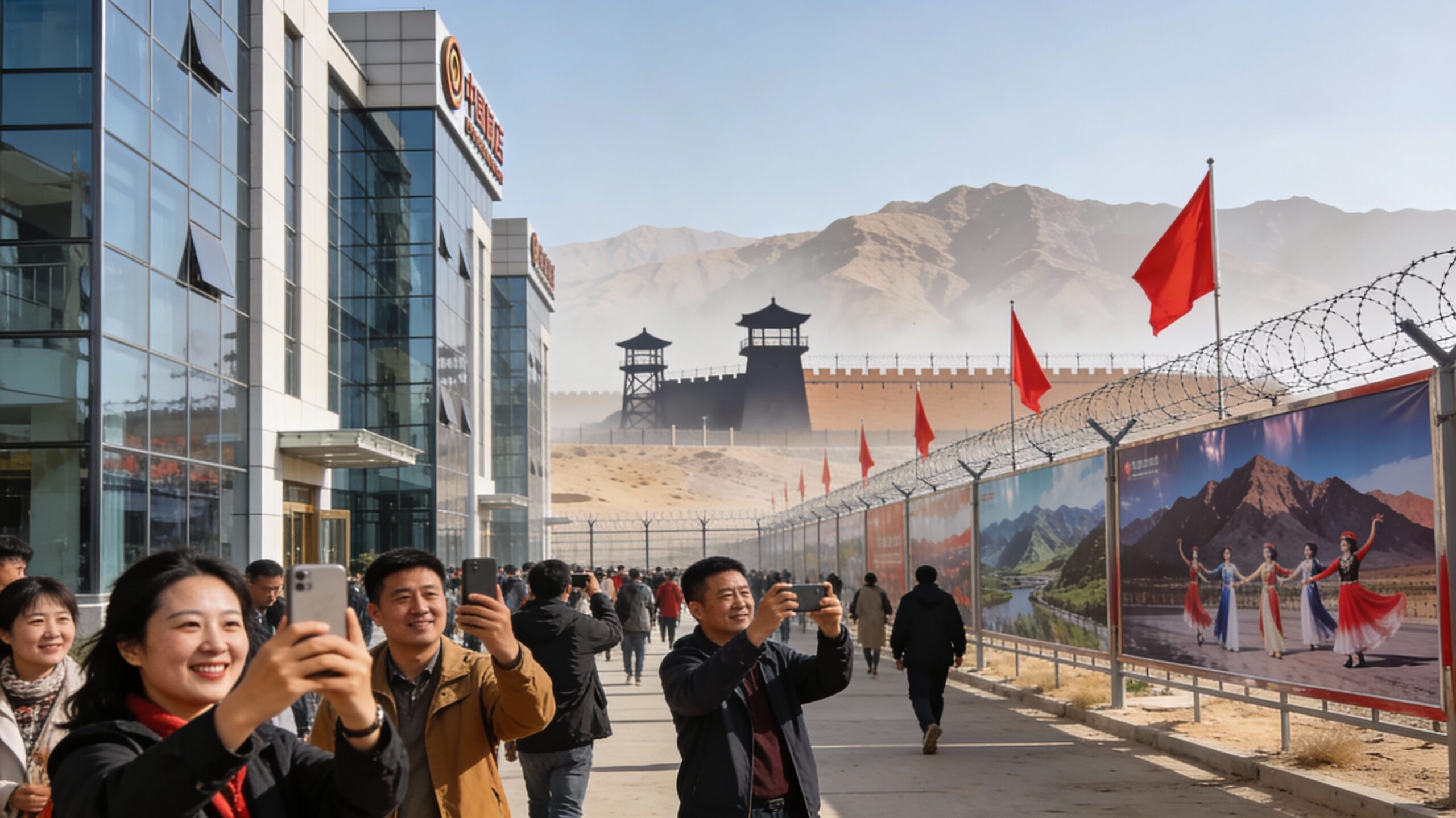
The surge in tourism is driven primarily by domestic Chinese visitors, though foreign arrivals are also increasing as Beijing markets East Turkistan as an alternative to China’s more commercialized destinations. State media and travel agencies promote scenic lakes, snow-capped peaks, and curated “ethnic” experiences, presenting the region as peaceful and prosperous under Chinese rule.
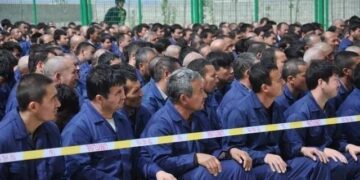
These portrayals stand in stark contrast to years of reporting by journalists, researchers, and rights groups documenting the dismantling of Uyghur social life, the criminalization of religious practice, and the securitization of everyday existence across the occupied country.
Hotels and Profits Amid Genocide
The tourism push has been accompanied by a surge in investment, including from major international hotel chains. Investigative reporting and rights research show that at least 100 hotels now operate in East Turkistan under global brands such as InterContinental Hotels Group, Marriott, and Hilton, with dozens more planned or under construction.
Some of these properties are located near, or on sites linked to, former or current detention camps, prisons, or coerced labor programs. Human rights experts warn that such investments entangle foreign corporations in an economy built under conditions of mass repression.
These developments come despite determinations by the United States government and more than a dozen Western parliaments that China is committing genocide and crimes against humanity against Uyghurs and other Turkic peoples. Rights advocates caution that international hotel chains and booking platforms risk profiting from, and helping normalize, a system rooted in dispossession, cultural erasure, and forced assimilation.
Selling a Curated “Ethnic” Experience
Tour itineraries in East Turkistan frequently feature staged “Uyghur villages,” scripted “Silk Road” performances, and tightly managed interactions with local residents. Tourists are generally confined to designated routes, hotels, and attractions under dense digital and physical surveillance.
Extensive documentation has shown the renaming of hundreds of Uyghur villages, the closure or demolition of mosques, and the remaking of historic urban centers such as Kashgar. In many cases, redevelopment has stripped these areas of living Uyghur cultural life, replacing it with sanitized facades designed for consumption.
For visitors, the result is often an “Instagram-ready” version of diversity that bears little resemblance to the realities described by Uyghur exiles, many of whom cannot safely return to their homeland.
Tourism as a Tool of Colonization
Researchers and activists argue that the tourism boom is not merely an economic project, but part of a broader strategy of colonization. By promoting carefully choreographed culture and landscapes while suppressing dissent and memory, Beijing seeks to recast East Turkistan as an inseparable, harmonious part of China.
The same policies that generate polished tourist experiences, they warn, are inseparable from a wider system of forced assimilation, demographic engineering, and the erosion of East Turkistan’s national and cultural character.

