








ETGE says Chinese intelligence has targeted East Turkistan diaspora groups through infiltration and coercion.
By The East Turkistan Post | May 18, 2026
WASHINGTON — East Turkistan, what Beijing calls ‘Xinjiang (New Territory),’ is the focus of allegations by exile leaders that Chinese intelligence services have carried out long-term infiltration and transnational repression against diaspora organisations. The East Turkistan Government in Exile (ETGE) says the Chinese intelligence East Turkistan diaspora campaign affects political organising abroad. Furthermore, the group argues it weakens international support for East Turkistan independence.
The ETGE says the effort has included influence operations, pressure on activists, and attempts to shape the public message of diaspora groups. Its claims are based on leaked internal files, public warnings from exile officials, and accounts of coercion described by the organisation. These claims have not been independently verified by The East Turkistan Post.
ETGE says Chinese intelligence targeted East Turkistan diaspora since 1996
The ETGE says a 1996 Chinese Communist Party directive sought to prevent the internationalisation of the East Turkistan issue. According to the group, the directive instructed Chinese entities to infiltrate overseas organisations and encourage internal division. It also sought to win over most diaspora groups while isolating those continuing to advocate for sovereignty.
The ETGE additionally says China expanded its overseas affairs work to target Turkic communities abroad. This included workshops and outreach to community leaders, according to the organisation. Those claims are attributed to the ETGE and have not been independently verified by this publication.
Furthermore, the ETGE says the United Front Work Department absorbed the Overseas Chinese Affairs Office in 2018. The group presents this as enabling a more coordinated state-linked influence campaign targeting diaspora politics.
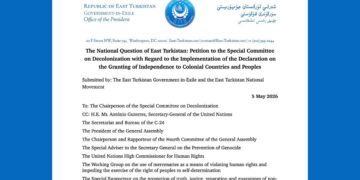
For background, see our earlier report on ETGE’s decolonization petition at the UN.
ETGE describes coercion, hostage diplomacy, and digital surveillance
According to the ETGE, Chinese authorities use persuasion, cultural programming, financial incentives, and public displays of religious tolerance to influence diaspora leaders. When those methods fail, the group says officials resort to harassment, blacklisting, and physical attacks.
The ETGE also says authorities use hostage diplomacy to silence critics abroad. Specifically, the group says officials threaten relatives remaining in East Turkistan. As a result, many diaspora members avoid political activity out of fear that family members could face detention or reprisals, according to the organisation.
In addition, the ETGE says the pressure extends to cyberspace. It cites an early 2025 phishing attempt targeting diaspora members in North America. The group says the scam involved WhatsApp accounts impersonating ETGE officials to access private communications. The ETGE also references cybersecurity research on mobile surveillance tools, including BadBazaar, which researchers have linked to monitoring Turkic peoples globally.
‘This is not merely espionage; it is an act of political warfare,’ ETGE Foreign Minister Salih Hudayar said in a statement. ‘For more than twenty years, a man now facing accusations of working for Chinese intelligence led an organisation that claimed to represent our people.’
Hudayar also stated that he was targeted by a suspected Chinese agent who allegedly fabricated criminal charges against him in 2018. Those charges were later dropped in 2022, according to the ETGE. This claim is reported as the ETGE’s position and has not been independently verified.
See also our report on transnational repression and East Turkistan diaspora communities.
ETGE calls for international investigation into diaspora infiltration
The ETGE is calling for international investigations into what it describes as infiltration of diaspora civil society groups. The organisation argues that such activity has shifted advocacy away from calls for East Turkistan independence toward more limited appeals for cultural autonomy.
The ETGE states that countering Chinese intelligence operations in diaspora communities is necessary to ensure that the true political will of East Turkistani people — namely, the restoration of sovereignty and independence — can be freely expressed and internationally recognised.
Chinese authorities have not publicly responded to the specific ETGE allegations cited in this article. The East Turkistan Post could not independently verify the claims described in the organisation’s statement.
The East Turkistan Post is an independent news publication. All claims are attributed to the ETGE or named individuals. ETGE assertions are reported as the organisation’s positions. Access restrictions and the nature of intelligence allegations limit independent verification.
